Today's Hours:


River Legacy
Nature Center
Our Green Sustainable Building
Long before sustainable design became a common conversation, River Legacy Nature Center was created with the surrounding environment in mind.
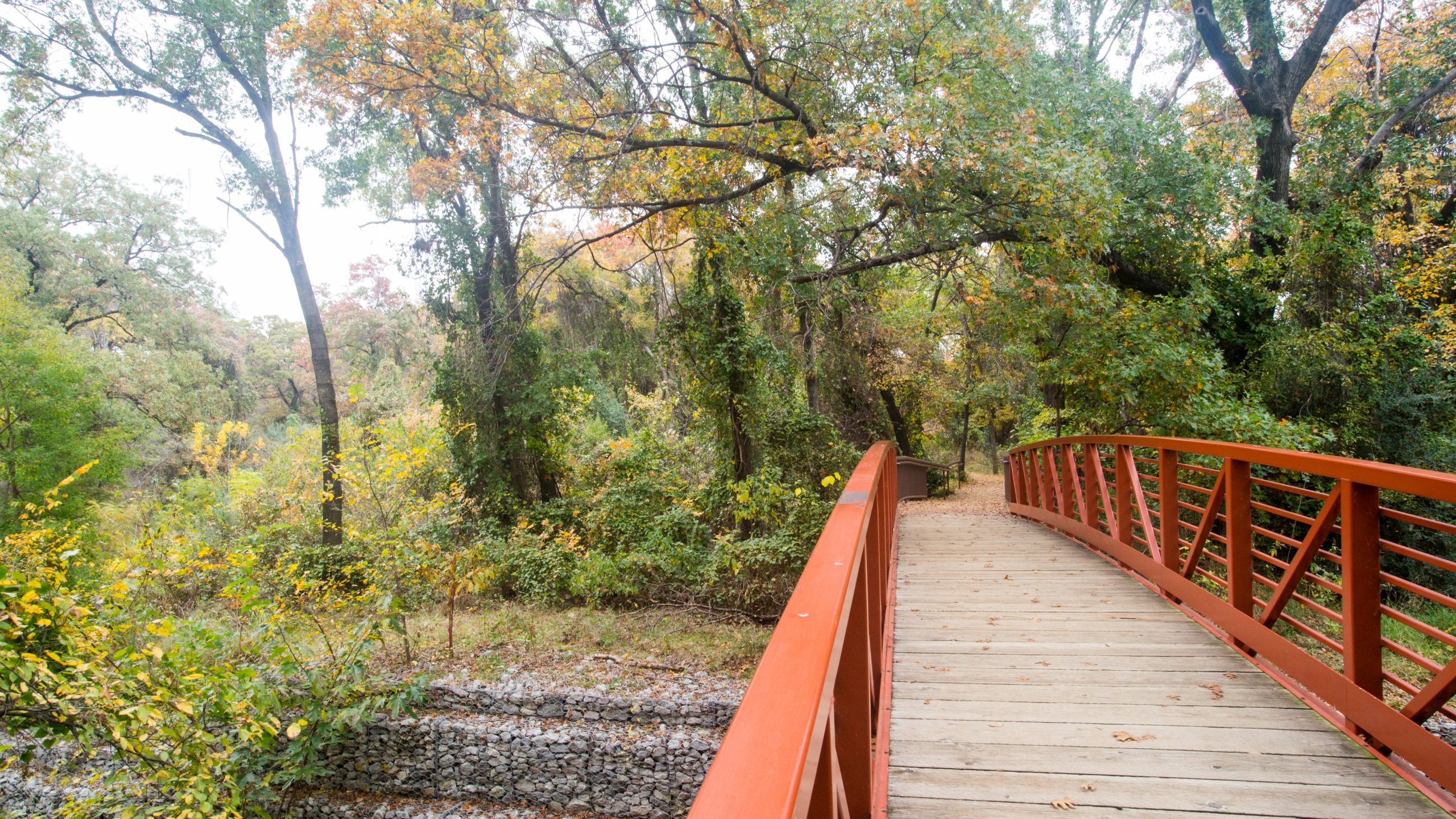
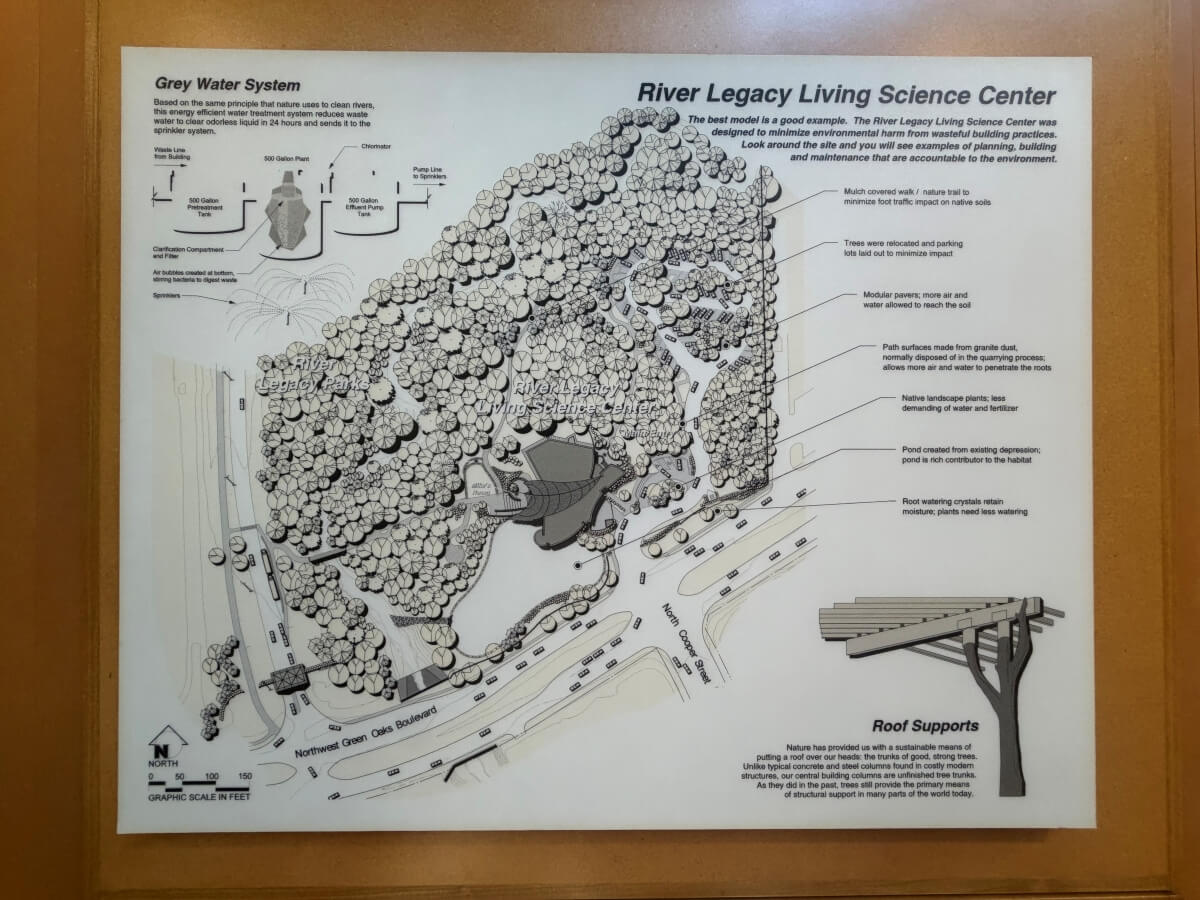
Originally opened in 1996 as the River Legacy Living Science Center, the building was designed to complement the forest rather than compete with it. From its placement among existing trees to the materials used throughout the building, thoughtful choices were made to conserve natural resources, reduce environmental impact, and connect visitors more closely with the landscape around them.
Even the inspiration for the building began in nature. During an early visit to the site, architects discovered a simple children’s fort made from fallen leaves and tree limbs in the woods. That spirit of discovery helped shape a Nature Center where the building itself could become part of the learning experience.
Today, sustainable features can be found throughout the Nature Center and its grounds—some immediately visible and others hidden beneath your feet, behind the walls, or built directly into the structure.
The Urgency is not for Earth's preservation; She will take care of herself. Humankind, on the other hand, must acknowledge the balance or become another minor adjustment we call extinction.
Sustainable Design - A New Awareness
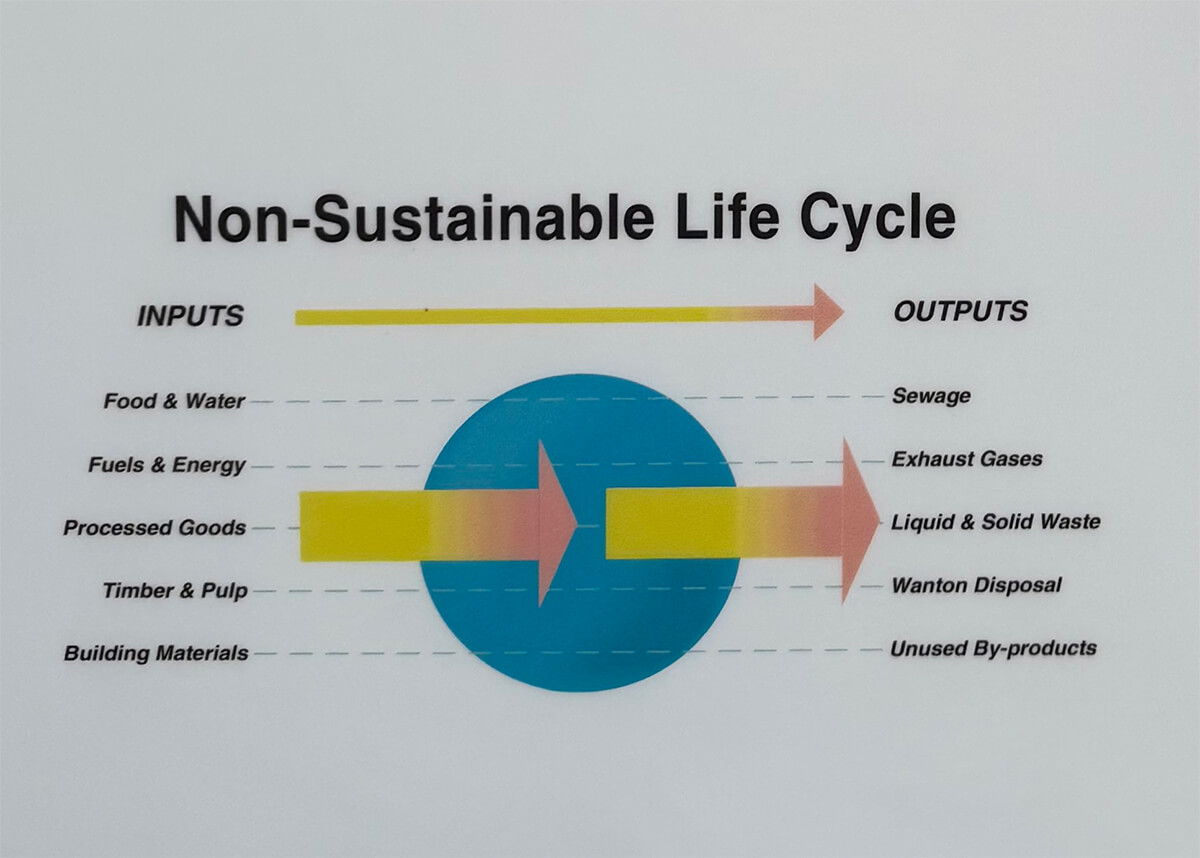
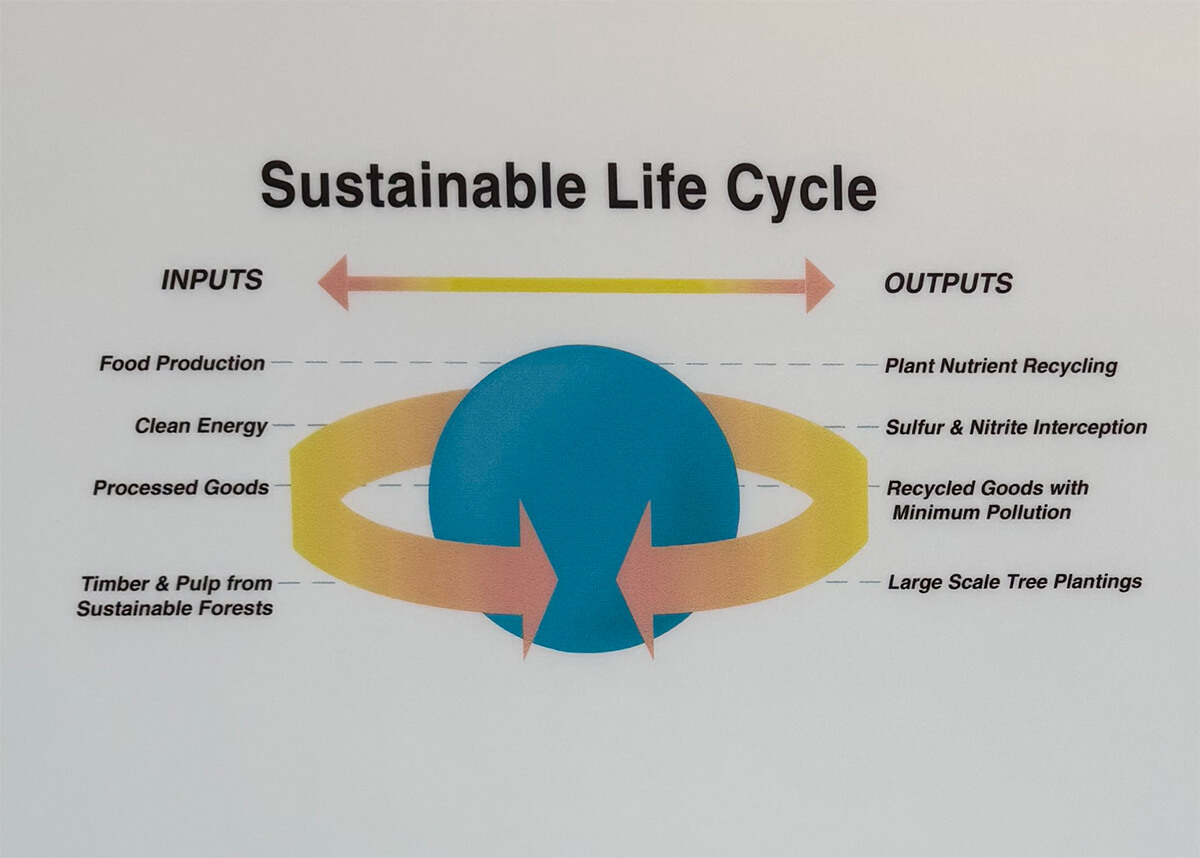
The long-term goal of sustainable design is to minimize resource degradation and consumption on a global scale. We hope that the River Legacy Living Science Center will serve as a model for a new awareness of the built environment. As a pioneering model of sustainable design, the Living Science Center was planned with the following in mind:
Natural Resources - A building can function within the surrounding ecosystem and not place additional stress on its resources or processes. Cultural Resources - The style, design elements and construction materials can reflect the cultural heritage of the region.
Site Planning - Adaptation, recycling, reuse and energy conservation can be supported by sensitive site design Architecture - A building can interact with its environment and be a manifestation of the environment's ability to sustain it.
Building Materials - These can first be gathered from sustainable sources in nature, secondly from recycled natural products, and thirdly from man-made and synthetic materials. Off-gassing hydrocarbon-based products should be avoided, even those that are recycled.
Energy and Utilities - Renewable energy resources are considered first, though the building can also be built to minimize energy needs. Water and energy conservation measures can be incorporated, and water treatment methods suitable to the ecosystem explored.
Waste Disposal - Methods to prevent unnecessary generation of waste can be explored, such as reusing materials on-site, sending them off-site for recycling, and composting of biodegradable waste.
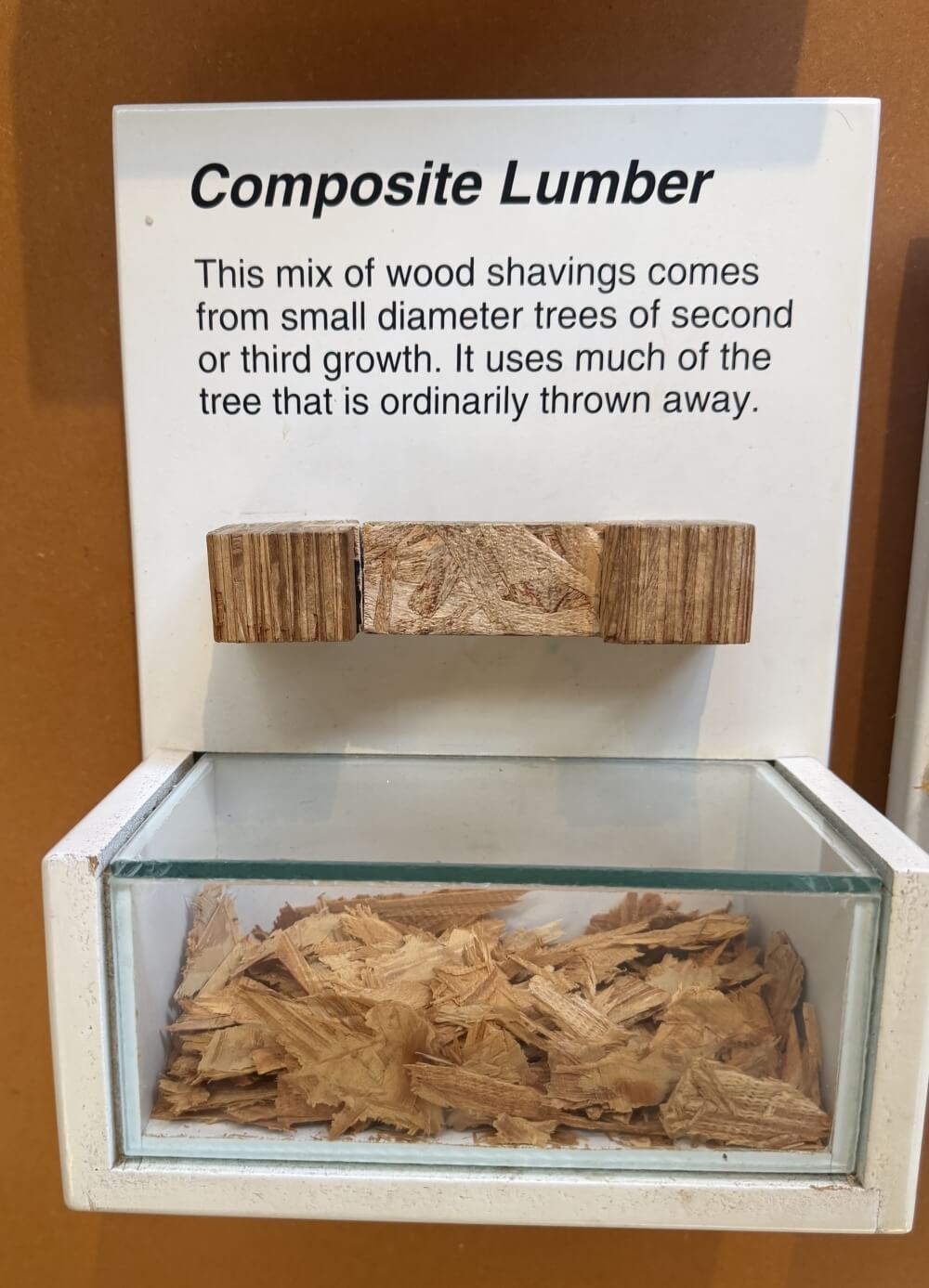
Composit Lumber
This mix of wood shavings comes from small diameter trees of second
or third growth. It uses much of the tree that is ordinarily thrown away.
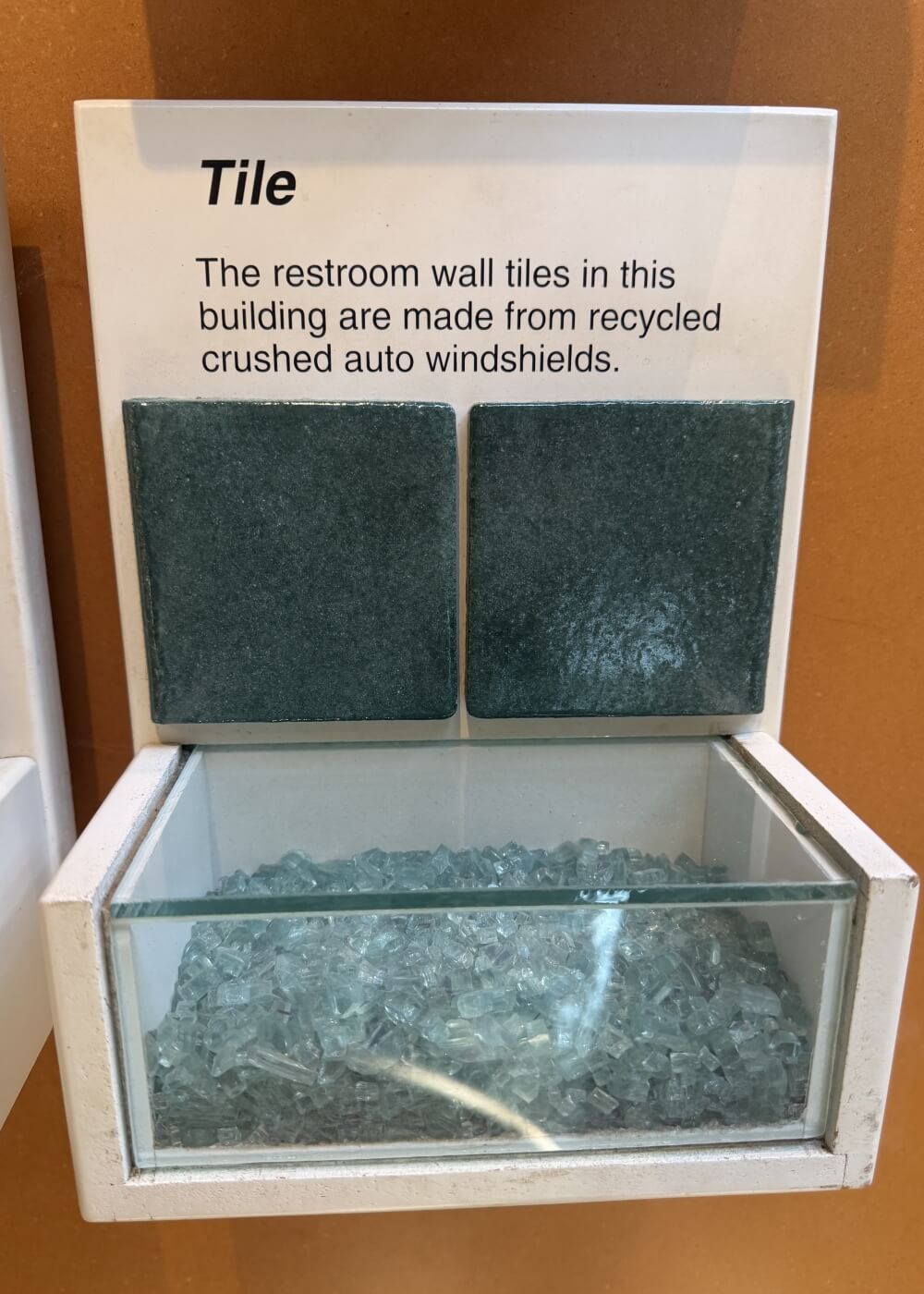
Tile
The restroom wall tiles in this building are made from recycled crushed auto windshields.
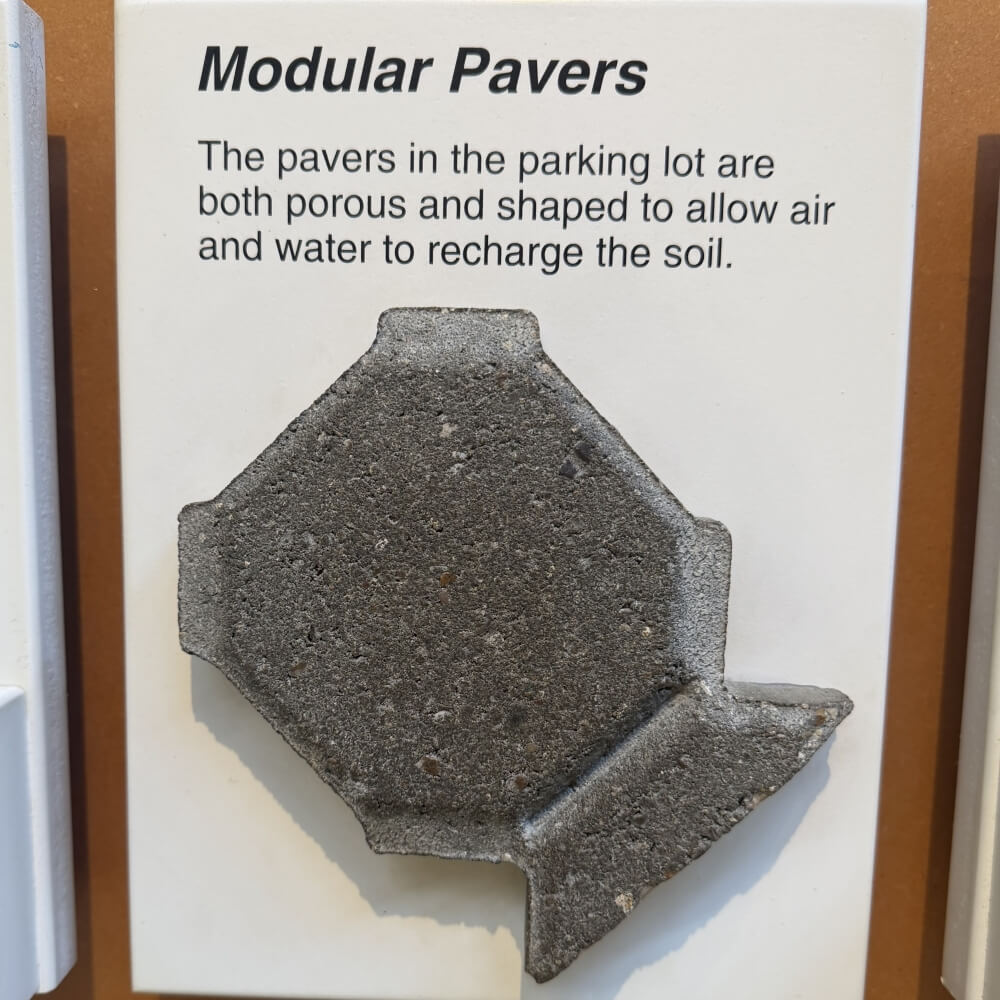
Modular Pavers
This mix of wood shavings comes from small diameter trees of second
or third growth. It uses much of the tree that is ordinarily thrown away.
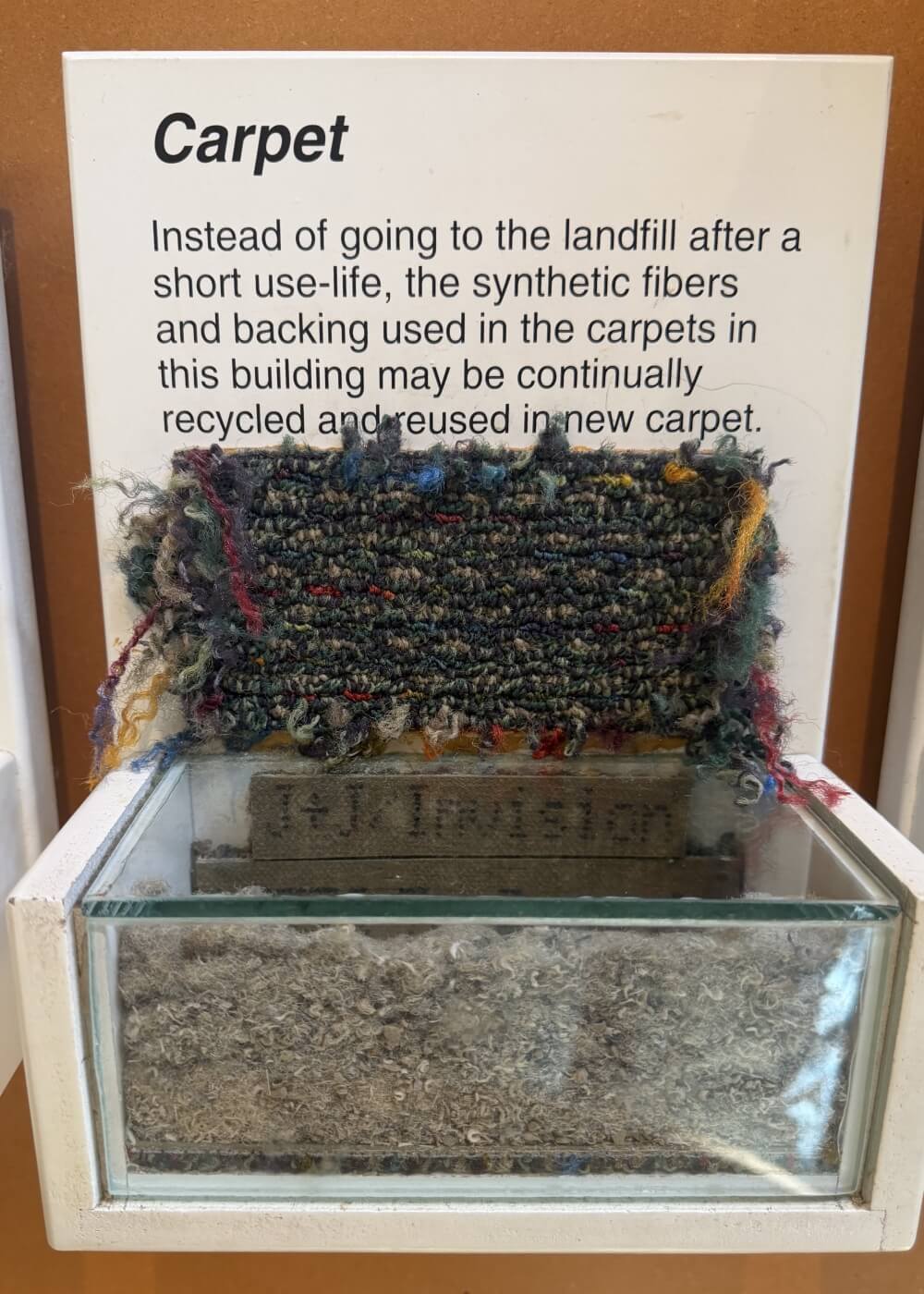
Carpet
Instead of going to the landfill after a short use-life, the synthetic fibers and backing used in the carpets in this building may be continually recycled and reused in new carpet.
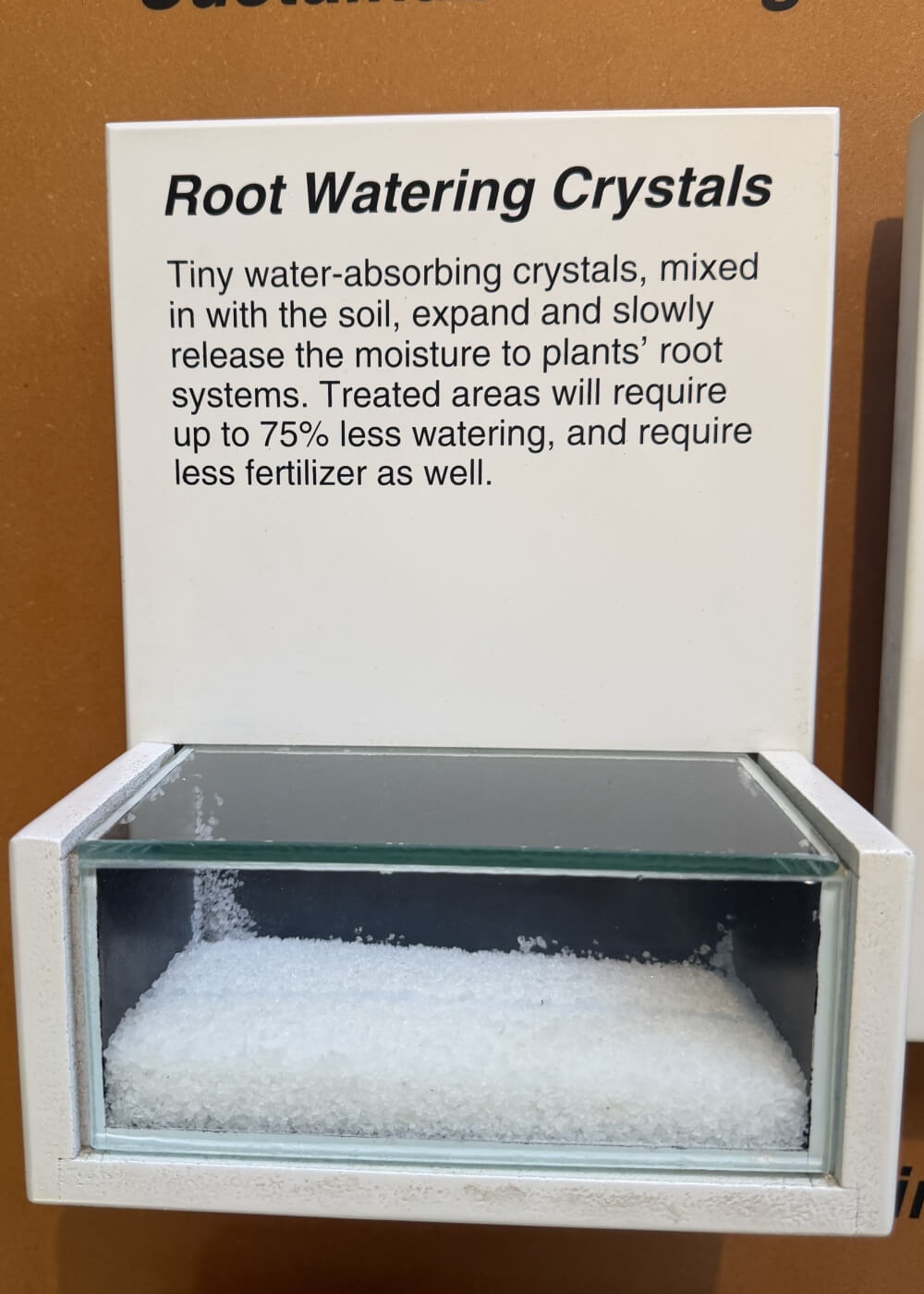
Root Watering Crystals
Tiny water-absorbing crystals, mixed in with the soil, expand and slowly release the moisture to plants' root systems. Treated areas will require up to 75% less watering, and require less fertilizer as well.
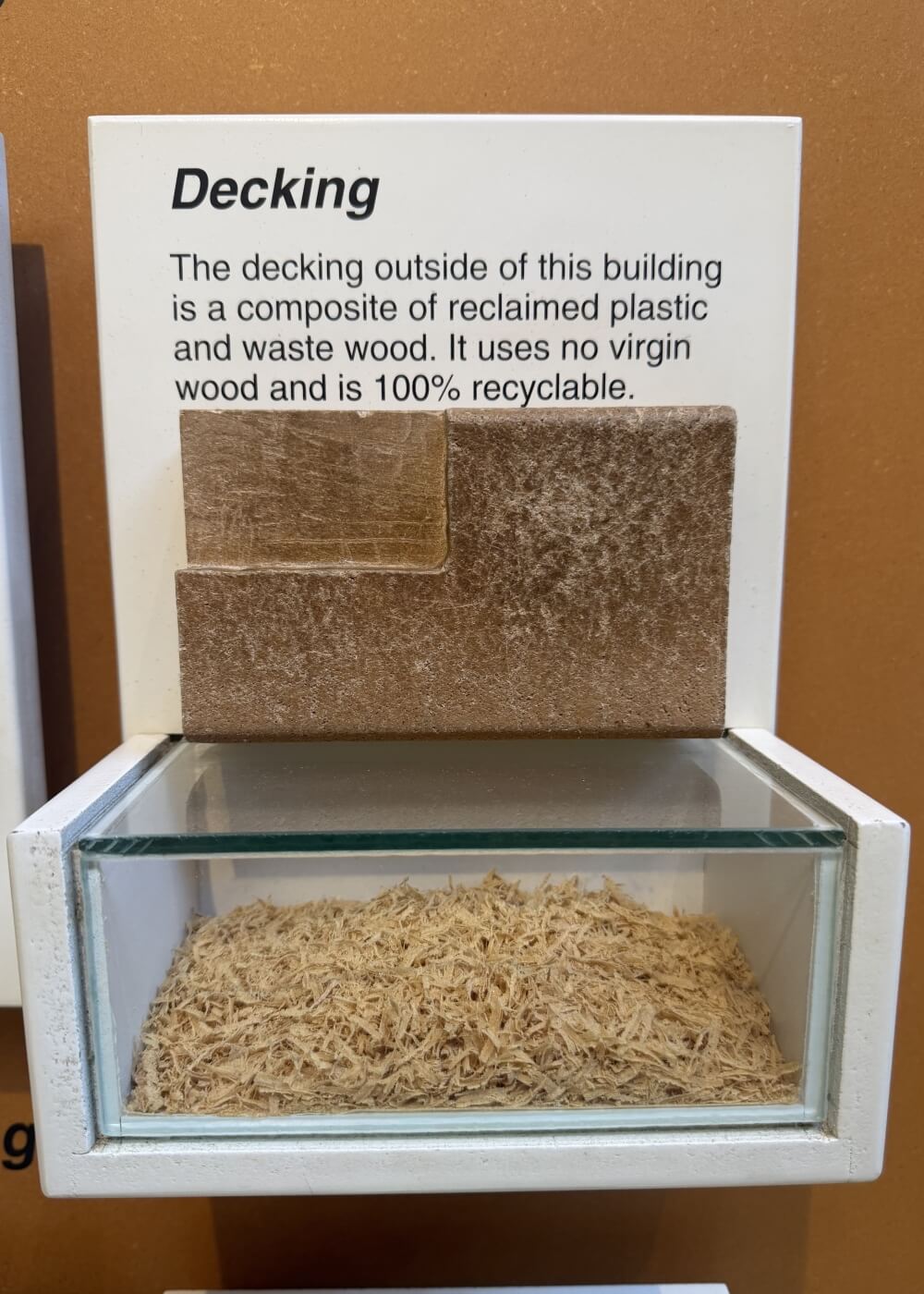
Decking
The decking outside of this building is a composite of reclaimed plastic and waste wood. It uses no virgin wood and is 100% recyclable.
How Can I Help?
Sustainable Design - A New AwarenessDesign with Awareness
Be cognizant of your design decisions and their consequences. For example, unprotected west-facing windows will produce unnecessary consequently, higher utility bills.
Build from Local Stock
Use building materials that are found in your region - for example, local quarried stone products or wood from second or third growth forests. Less energy - oil and gasoline - will be used to get these products to your site and they are more likely to be suited to your climate.
Plant with Nature, not against Nature
Use plants and trees in your landscaping that are native to your region and climate. They are better suited to the soils and the average amounts of rainfall and sunshine. They will also need less water and little or no fertilizer.
Build with Sustainable Materials
If you are building a new home or remodeling an existing one, use materials that are sustainable, either made from recycled products or made from sustainable ingredients. Examples are rafters made from recycled wood, cement made from fly ash, and insulation made from shredded newspapers.
Recycle and Reuse
Recycle your waste materials so they can be reclaimed and reused in new construction. Almost everything in your home can be recycled and reused. Old light bulbs can be made into bathroom tiles, and old carpets can be reclaimed and rewoven.
Build with Nature in Mind
Be active and inform yourself about the variety of new sustainable building materials and building practices Learn how you can contribute to preserving earth's non-sustainable resources by spreading the news that we can live in harmony with nature.