Today's Hours:

Hibernation or brumation?
2 minutes
December 4, 2018
How do animals survive the winter? Winters at River Legacy tend to be milder than in most places around the country because of our location. Still, there are periods when the temperature drops to well below freezing and, sometimes, lingers there for days. Snow and ice events are also expected at least a couple of times during the winter.
Birds have adaptations for surviving the winter that are unique to them. We will talk about them in an upcoming post! For now, we are going to be focused on mammals, reptiles, and amphibians. All of these groups go into a state of dormancy during which they stop growing, grind their physical activities to a halt, and their metabolism significantly slows down. But there are differences in how each group does it.
Hibernation refers to the process mammals go through whereas brumation applies to
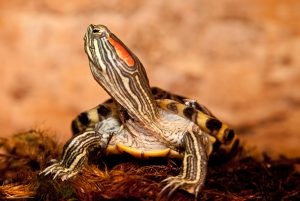
Reptiles, such as this red-eared slider (Trachemys scripta elegans), brumate during the winter
reptiles and amphibians. During hibernation, mammals go into a full state of sleep. They slow their breathing and heart rate down to almost full stop and rely on fatty deposit for their energy during this time. They do not wake up from hibernation at all until spring arrives. How do they get their fatty deposits? By eating more and more in the fall. Bats are really the only group that lives at River Legacy that truly hibernate. Other River Legacy mammals such as bobcats, skunks, fox squirrels, coyotes, raccoons, and opossums do not hibernate and instead just seek shelter in someplace warm and do not come out very much OR are able to be fairly active while winter lasts.
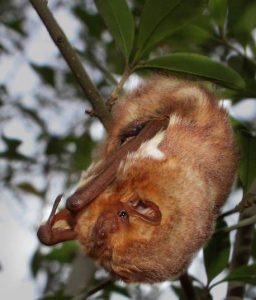
Bats, such as this Eastern red bat (Lasiurus borealis), are the only River Legacy group of mammals that truly hibernate.
Brumation, on the other hand, is the process by which reptiles and amphibians survive the winter. During brumation, these animals slow down as well but not to the point of almost stopping heart rate and breathing altogether. One key difference between brumation and hibernation is the fact that brumating animals are able to wake up from time to time in the middle of the winter. This is known as punctuated activity. Why do they need to wake up from time to time? Unlike mammals, which can survive the winter without water, reptiles and amphibians need it periodically. Another key difference is found in the method by which the animals obtain their energy. Mammals, as mentioned, rely on fatty deposits. Reptiles and amphibians instead use glycogen for their energy needs. Reptiles also can survive with very little oxygen during brumation because of this glycogen storage. Examples of River Legacy reptiles and amphibians that brumate include frogs, toads, snakes, and turtles.
If you would like to learn more about the winter adaptations of mammals and reptiles, we invite you to join our Winter Break Activities that are going to take place from December 26th through the 28th. For more information, please visit www.riverlegacy.org/calendar. We hope to see you there!
Upcoming Events
October 31, 2026
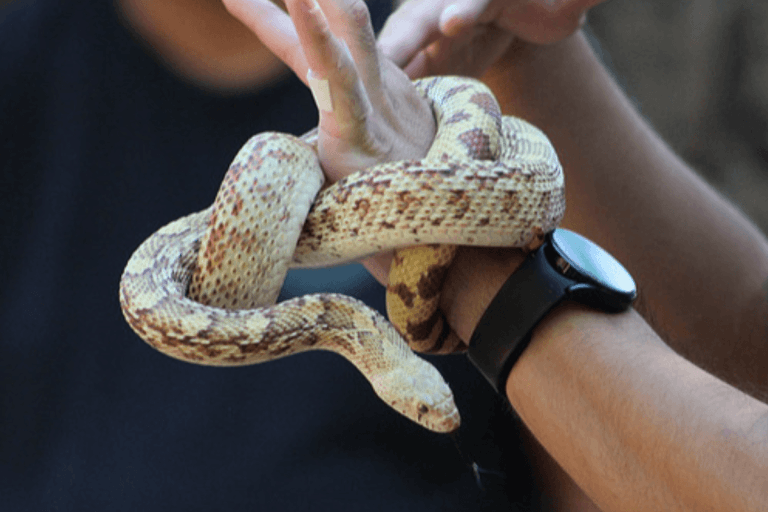
Free Animal Presentation: Sonoran Gopher Snake
Join us for Creature Features and meet River Legacy Nature Center’s featured animal ambassador: the Sonoran gopher snake! Learn about the animal’s adaptations, behavior, lifestyle...
Learn More
November 2, 2026
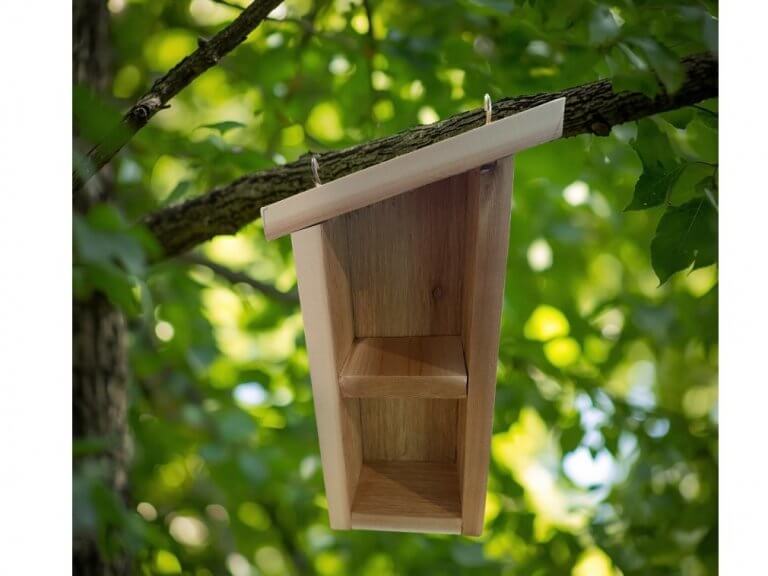
Insect Inn Enrichment Class (Ages 5-9)
Welcome to the Insect Inn, where young nature explorers become builders and bug buddies! In this hands-on STEM class, children will create their very own...
Learn More
November 5, 2026
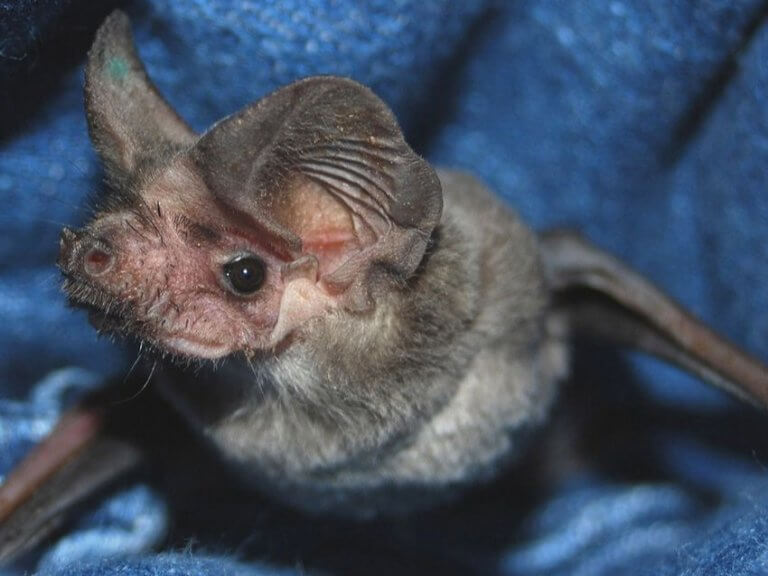
Adventures with Bats (2.5-4 yrs old)
Join us to learn about the wonderful life of bats! This is a 1 1/2 hour learning opportunity for preschoolers (ages 2 1/2 to 4...
Learn More
November 6, 2026
A Night with Nature
Join us for A Night With Nature—an enchanting evening of food, drinks, and fun at River Legacy Nature Center! This 21 fundraiser supports our vital environmental...
Learn More
November 19, 2026
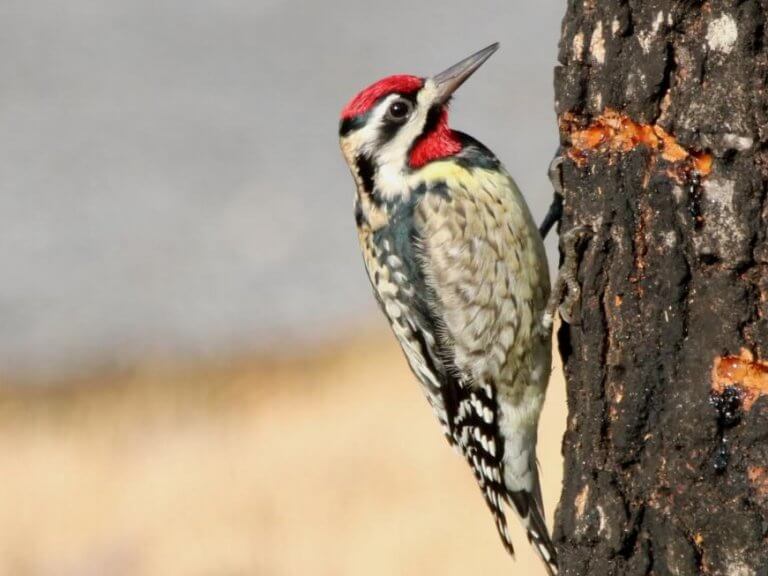
Adventures with Woodpeckers (2.5-4 yrs old)
Join us to learn all about woodpeckers! This is a 1 1/2 hour learning opportunity for preschoolers (ages 2 1/2 to 4 years old) and...
Learn More
November 23, 2026
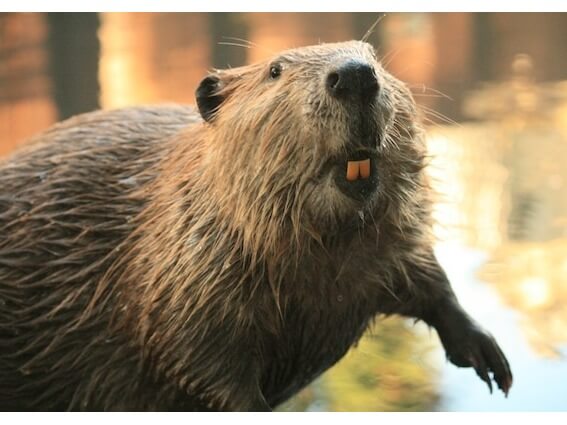
Nature’s Simple Machine Enrichment Class (Ages 5-9)
In this hands-on class, young explorers will discover how simple machines can be found in nature and how animals use these clever tools to help...
Learn More
November 28, 2026
Free Animal Presentation: Salamanders
Join us for Creature Features and meet River Legacy Nature Center’s featured animal ambassadors: Salamanders! Learn about the animal’s adaptations, behavior, lifestyle and natural history...
Learn More
December 3, 2026
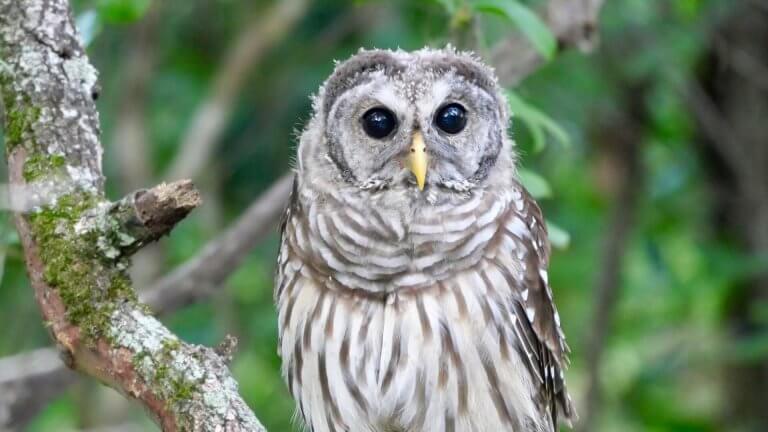
Adventures with Owls (2.5-4 yrs old)
Join us to learn all about owls! This is a 1 1/2 hour learning opportunity for preschoolers (ages 2 1/2 to 4 years old) and...
Learn More
December 4, 2026
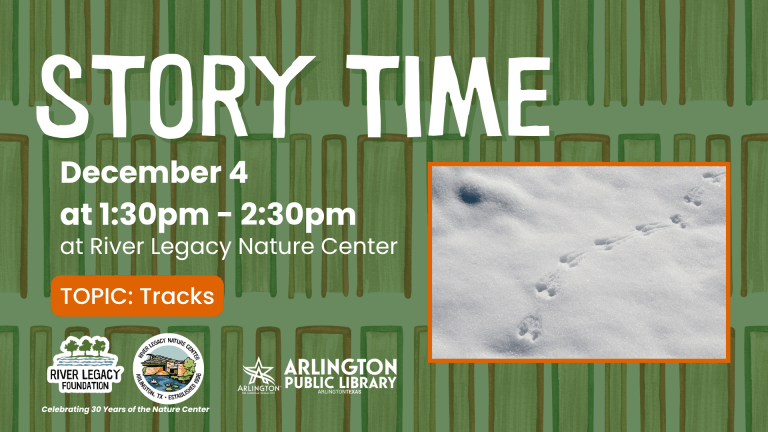
Family Story Time: Animal Tracks
Join us on December 4 for a family-friendly nature program all about story time and animal tracks! In partnership with the Arlington Public Library, this...
Learn More
December 21, 2026
Animal Track Adventures Enrichment Class (Ages 5-9)
Join us for an exciting hands-on adventure into the world of animal tracks! In this class, young explorers will learn how animals leave clues behind—and...
Learn More